
The Course
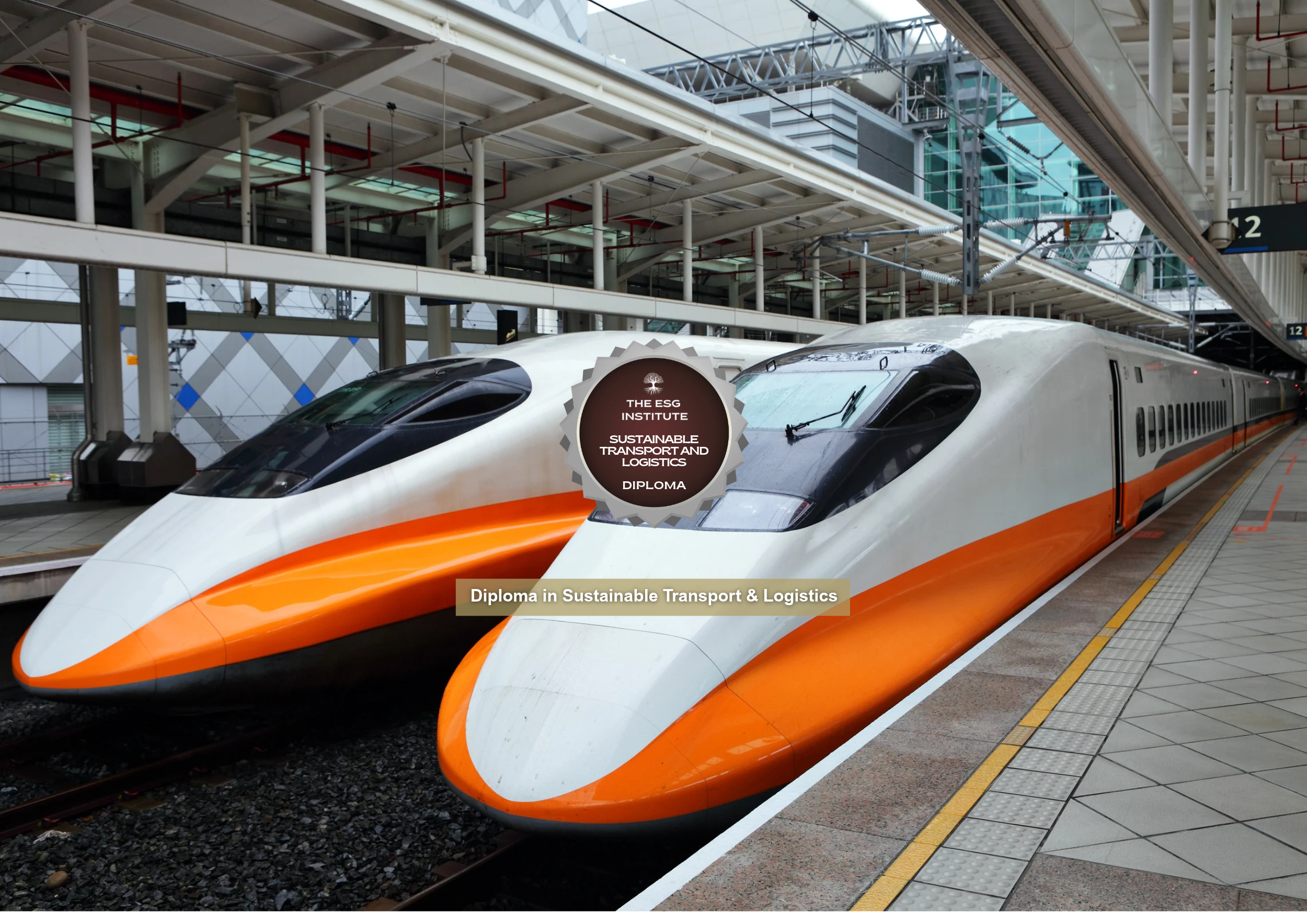
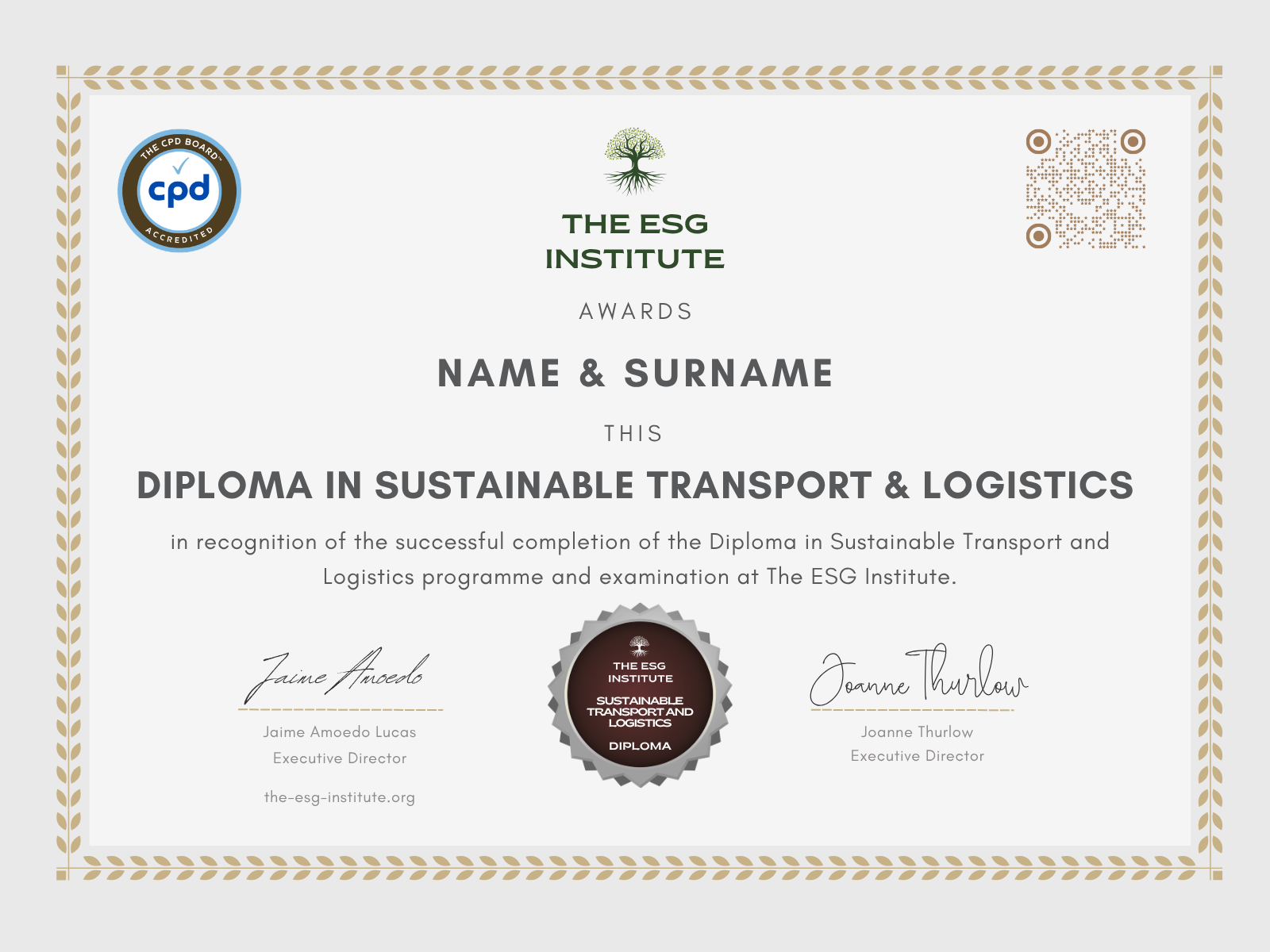
The Diploma in Sustainable Transport and Logistics develops the knowledge and judgement needed to measure, plan and lead the move to cleaner, safer and fairer transport.
It covers road, rail, maritime and air freight, logistics hubs and passenger mobility, ISO 14083 and the GLEC Framework, IMO rules, CORSIA, EU emissions trading and FuelEU Maritime.
Participants learn to calculate transport emissions, compare electric and hydrogen vehicles and renewable fuels, plan modal shift and urban logistics, and address road safety and working conditions.
It develops skills to build targets, investment cases and credible disclosures.
The programme concludes with an interactive simulation and a capstone project, combining fleet, fuel and network decisions for a fictional logistics group with a complete transition plan for an organisation of the participant's choice.
It suits: logistics, fleet and transport managers, freight buyers, sustainability leads, port, airline and public transport staff, policy officials, consultants and investors.
Curriculum
- Choose your language / Elige tu idioma / Choisissez votre langue / اختر لغتك / 选择您的语言 / Выберите язык / अपना भाषा चुनें / আপনার ভাষা নির্বাচন করুন / Escolha o seu idioma / Pilih bahasa Anda / Chọn ngôn ngữ của bạn / Dilinizi seçin / Wählen Sie Ihre Sprache / Scegli la tua lingua / 언어를 선택하세요
- Lesson 0: Welcome and Course Map
- Lesson 1.1: Transport, Logistics and Sustainability: Systems, Scope and Why It Matters
- Lesson 1.2: The Environmental and Social Footprint of Moving People and Goods
- Lesson 1.3: Avoid, Shift, Improve: The Core Framework for Sustainable Transport
- Lesson 1.4: Global Policy, Targets and Regulation Across Transport Modes
- Lesson 1.5: Building the Strategy and Business Case for Sustainable Transport and Logistics
- Lesson 2.1: Transport Emissions Accounting: ISO 14083, the GLEC Framework and CountEmissionsEU
- Lesson 2.2: Activity Data, Emission Factors and Well-to-Wheel Boundaries
- Lesson 2.3: Calculating Emissions Across Road, Rail, Sea, Air and Logistics Hubs
- Lesson 2.4: Scope 1, 2 and 3 Transport Emissions for Carriers, Shippers and Forwarders
- Lesson 2.5: Air Pollution, Noise, Safety and Other Non-Carbon Indicators
- Lesson 3.1: Fleet Efficiency: Vehicles, Drivers, Routing and Load Factors
- Lesson 3.2: Battery Electric and Hydrogen Trucks and Vans: Technology and Total Cost of Ownership
- Lesson 3.3: Charging, Refuelling and Depot Energy Management
- Lesson 3.4: Renewable and Low-Carbon Fuels for Road Transport
- Lesson 3.5: Sustainable Urban Logistics and Last-Mile Delivery
- Lesson 4.1: Modal Shift and Intermodal Freight: Rail and Inland Waterways
- Lesson 4.2: Shipping Decarbonisation Rules: IMO, CII, EU ETS and FuelEU Maritime
- Lesson 4.3: Alternative Marine Fuels, Ship Efficiency and Green Shipping Corridors
- Lesson 4.4: Aviation and Air Freight: CORSIA, Sustainable Aviation Fuel and ReFuelEU
- Lesson 4.5: Sustainable Ports, Airports, Warehouses and Logistics Hubs
- Lesson 5.1: Sustainable Urban Mobility Planning and Public Transport
- Lesson 5.2: Active Travel, Shared Mobility and Mobility as a Service
- Lesson 5.3: Business Travel, Commuting and Corporate Mobility Programmes
- Lesson 5.4: Road Safety, Working Conditions and Human Rights in Transport
- Lesson 5.5: Just Transition, Accessibility and Equity in Transport
- Lesson 6.1: Targets and Transition Plans for Transport Companies and Shippers
- Lesson 6.2: Carbon Pricing, Emissions Trading and Book and Claim
- Lesson 6.3: Financing Fleets, Infrastructure and the Investment Case
- Lesson 6.4: Digital Tools, Data and AI for Sustainable Logistics
- Lesson 6.5: Procurement, Reporting and Credible Green Claims
- Lesson 8.1: Capstone Brief and Route Choice
- Lesson 8.2: Stage 1: Define the Organisation, Transport Boundary and Objectives
- Lesson 8.3: Stage 2: Build the Emissions Baseline and Identify Hotspots
- Lesson 8.4: Stage 3: Develop and Compare Decarbonisation Options
- Lesson 8.5: Stage 4: Build the Investment Case and Recommend a Portfolio
- Lesson 8.6: Stage 5: Plan Implementation, Infrastructure, People and Governance
- Lesson 8.7: Stage 6: Review, Present and Submit the Transition Plan
Comprehensive
Covering Road, Rail, Maritime, Aviation and Urban Mobility

Practical
Building Skills Through Worked Cases, Simulation and a Capstone Project

Professional
Developing Evidence-Based Judgement and Credible Transition Planning